

Electric bikes and e‑scooters are now a permanent feature of transport across Queensland. With rapidly increasing adoption has come a significant rise in serious injuries. In response, the Queensland Government will introduce e‑mobility reforms in 2026 aimed at improving public safety and clarifying legal responsibility.
These reforms affect private riders, hire‑scheme users (including Lime scooters and e‑bikes), parents, retailers, and commercial operators. This article explains what is changing, how to ride lawfully and safely, and what compensation rights may arise if an accident occurs.
QUEENSLAND E-SCOOTER AND E-BIKE LAWS 2026
Following a Parliamentary Inquiry into e‑mobility injuries and enforcement challenges, the Government accepted, or accepted in principle, all 28 recommendations of the inquiry. The reforms create uniform rules across all e‑mobility devices and strengthen police enforcement powers.
Commencement is expected from 1 July, with a six‑month transition period.
MINIMUM AGE AND LICENSING REQUIREMENTS FOR E-SCOOTERS AND E-BIKES
Under the new framework:
- Riders must be at least 16 years old to use any e‑mobility device.
- Riders must hold at least a learner licence, or an equivalent interstate or overseas licence.
- Users of mobility aids, such as e‑wheelchairs, are exempt.
These requirements apply equally to privately owned devices and hire‑scheme scooters and bikes.
SPEED LIMITS AND LEGAL DEVICE CLASSIFICATION IN QUEENSLAND
The reforms introduce consistent statewide speed rules:
- A 10 km/h limit on footpaths and shared pedestrian areas; and
- A maximum speed of 25 km/h on bike paths and local streets.
Devices capable of travelling faster than 25 km/h without assistance will be reclassified as motorcycles or mopeds, triggering registration, insurance, and licensing requirements. Illegal or modified devices will be subject to seizure by police.
POLICE POWERS AND ENFORCEMENT OF E-SCOOTER LAWS
Police will have enhanced enforcement authority, including:
- Random breath testing of e‑mobility riders;
- Powers to seize and destroy unlawful devices, including on a first offence;
- Authority to issue penalties to parents or guardians where minors ride unlawfully; and
- Enforcement action against retailers and hire operators facilitating illegal use.
Compliance with these laws will be relevant not only to penalties but also to fault and liability if an accident occurs.
HOW TO RIDE AN E-SCOOTER OR E-BIKE LEGALLY IN QUEENSLAND
Device Requirements
Riders should ensure their device complies with Queensland standards, including:
- Maximum assisted speed of 25 km/h;
- Motor output within permitted limits; and
- Functional brakes, lights, tyres, and warning devices.
Road Rules
- Keep to 10 km/h on footpaths and shared zones;
- Always give way to pedestrians;
- Wear an approved helmet; and
- Ride predictably and signal where safe.
Illegal Modifications
Removing speed limiters or modifying motors may reclassify the device as a motorcycle, increasing both legal exposure and injury risk. Modified devices are likely to be seized under the new powers.
Riding Under the Influence
Under Queensland’s 2026 reforms, riding an e‑bike or e‑scooter while affected by alcohol or drugs is treated in substance the same as driving a car under the influence. Police will have power to conduct random breath testing, and riders will be subject to the same blood alcohol limits that apply to motor vehicle drivers, including zero‑alcohol requirements for learners and provisional licence holders. Drug‑affected riding is treated equally seriously.
Intoxication has significant legal consequences. Riders may face fines, licence disqualification, or prosecution, particularly if injury occurs.
From a compensation perspective, riding while intoxicated is strong evidence of negligence or contributory negligence and can substantially reduce or defeat a damages claim, even where another party is partly at fault. Riding impaired is not viewed as casual or minor misconduct — it is a serious safety breach with lasting legal and financial consequences.
LIME SCOOTERS AND HIRE E SCOOTER RULES IN BRISBANE
The new legislation applies equally to hire‑scheme users.
Lime currently requires riders in Brisbane to be over 18, despite not requiring a driver’s licence. Under the Queensland reforms, all riders (including Lime users) must be at least 16 and hold a learner licence or equivalent.
In addition to state law, Lime devices are governed by internal controls, including:
- Geofenced no‑ride and slow‑speed zones;
- Automatic speed limiting (including 10 km/h zones);
- Operational area restrictions;
- App‑based parking instructions; and
- Helmets attached to some devices.
These company‑level controls remain, but operators will be required to ensure compliance with the state framework.
How to Know Your Speed on a Lime Scooter
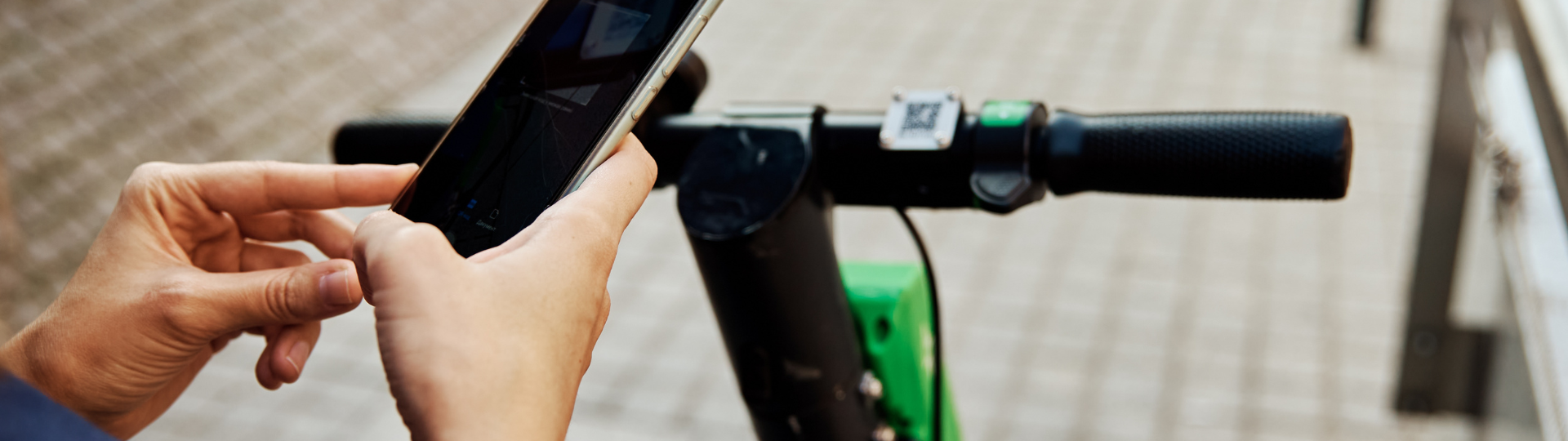
Lime scooters do not have handlebar speedometers.
Riders can nevertheless gauge speed by:
- In‑app speed information during some rides;
- Automatic speed reduction in geofenced slow‑zones;
- Physical feedback when the motor stops accelerating at the capped speed (generally 25 km/h); and
- Optional GPS‑based phone apps (noting distraction risks).
As Lime scooters are software‑controlled, most riders will remain within lawful speed limits unless riding unlawfully.
WHAT TO DO AFTER AN E SCOOTER OR E BIKE ACCIDENT
Immediate Steps
- Move to safety and call 000 if anyone is injured;
- Exchange names and contact details;
- Photograph the scene, device condition, injuries, and hazards;
- Identify witnesses;
- Report the incident to police and the hire‑scheme provider (if applicable); and
- Obtain medical assessment even for minor symptoms.
Why Early Documentation Is Critical
Early documentation plays a crucial role in both safety investigations and any later compensation claim. In the aftermath of an e‑bike or e‑scooter accident, conditions can change quickly: devices may be moved, vehicles driven away, injuries may worsen, and digital data can be lost or overwritten.
Prompt evidence gathering helps preserve an accurate record of what actually occurred.
Photographs of the scene, the position and condition of the device, visible hazards, and injuries provide objective evidence that cannot be recreated later.
Witness details taken at the scene are often the only opportunity to secure independent accounts, as witnesses may become uncontactable over time.
For hire‑scheme devices such as Lime, early reporting is especially important. App‑based data, ride logs, speed controls, and geofencing records may only be retained for a limited period unless an incident is formally logged. Screenshots taken at the time of the ride can help preserve critical information.
Medical records created shortly after the incident establish an early link between the accident and the injury.
Delays in treatment or reporting can be relied upon by insurers or defendants to argue that injuries were minor, unrelated, or caused later by another event.
In short, early documentation protects your position. It reduces disputes about how an accident happened, supports findings of fault, and helps ensure that entitlements to compensation are properly assessed.
CAN YOU CLAIM COMPENSATION AFTER AN E SCOOTER ACCIDENT IN QUEENSLAND
If you are injured while using an e‑bike or e‑scooter, your ability to receive compensation depends on how the accident happened and who was responsible. The new Queensland laws can also affect the outcome.
Motor Vehicle Accidents
If a car, truck, bus, or other motor vehicle is involved in the accident, compensation may be available through that vehicle’s compulsory third party (CTP) insurance. This is the insurance every registered vehicle in Queensland must have.
If the driver caused the accident, an injured rider may be able to make a claim for medical expenses, lost income, and pain and suffering.
However, how the rider was behaving at the time matters. If the rider was speeding, riding while affected by alcohol or drugs, riding illegally, or did not meet the age or licence requirements, those factors may reduce the amount of compensation they receive. In some cases, it may affect whether compensation is available at all.
In simple terms, the law looks at whether both the driver and the rider were doing the right thing at the time of the crash.
Faulty Scooters or Operators
Sometimes an injury is caused by a faulty device or the way a hire scooter or bike has been managed. This might include:
- brakes not working properly;
- the scooter cutting out suddenly;
- software or speed control issues; and
- a hire scooter being left in an unsafe location.
In these situations, responsibility may sit with the company that owns or manages the device, or with the manufacturer.
Evidence can be very important here. Useful information may include:
- screenshots from the app;
- ride history or logs;
- photos of the scooter or bike;
- photos of where the device was located; and
- records showing earlier problems with the device.
Reporting the issue early helps preserve this information.
Rider vs Rider or Pedestrian
If an accident involves another e‑scooter rider, cyclist, or a pedestrian, responsibility is worked out by looking at who was being safe and who was not.
The new laws will be relevant. Things like age, whether the rider was legally allowed to ride, how fast they were going, and whether they were following the rules can all affect how responsibility is shared.
For example, a rider travelling too fast on a footpath may be held responsible if a pedestrian is injured.
HOW YOUR BEHAVIOUR AFFECTS COMPENSATION (CONTRIBUTORY NEGLIGENCE)
Sometimes an accident is not caused by just one person. A rider may be injured even though they also made unsafe choices at the time. When this happens, compensation can be reduced.
For example, compensation may be affected if a rider was:
- travelling faster than allowed;
- riding after drinking alcohol or using drugs;
- riding without the required licence or under the legal age;
- using an illegal or modified device; and
- ignoring road rules or riding in unsafe areas.
If these factors played a part in the accident, the law may reduce the amount of compensation paid. This is because the rider’s own actions increased the risk of injury.
This is why following the e‑bike and e‑scooter rules matters not only for safety, but also for protecting your rights if something goes wrong.
SPEAK TO AN E-SCOOTER ACCIDENT LAWYER IN QUEENSLAND TODAY
If you have been injured in an e-scooter or e-bike accident, getting legal advice early can make a significant difference to your claim.
Our team can:
- Assess your eligibility for compensation
- Explain your legal rights clearly
- Help secure critical evidence
- Guide you through the claims process
If you have been injured or have questions after an e bike or e scooter incident, contact us today for a free claims check and find out where you stand.
Our team is here to discuss your situation and provide clear guidance on your next steps.
KEY TAKEAWAY
Queensland’s 2026 e‑mobility reforms place greater responsibility on riders and give police stronger powers to enforce the rules. These changes are designed to improve safety, but they also affect what happens after an accident.
How you were riding, whether you were legally allowed to ride, and whether you followed the rules can all directly impact compensation outcomes. Early steps such as getting medical help, taking photos, saving app information, and making reports can make a real difference later.
If you are injured, getting early advice from someone experienced with e‑bike and e‑scooter accidents can help you understand your position, protect important evidence, and avoid mistakes that may affect your rights.
Posted in: Latest News, Personal Injury
May 01 2026